In the modern digital economy, attention is scarce, but trust is even scarcer. When a user scrolls through a crowded social media feed or opens a marketing email, they make a split-second decision: Is this link worth the risk?
A generic, randomized link like blinkurls.com/a7b2c9 offers zero context. In contrast, a branded short link like blinkurls.com/summer-sale acts as a digital handshake. It tells the user who you are and where they are going before they ever lift a finger.
Defining the Branded Short Link (Custom Alias)
A branded short link (or custom alias) is the process of replacing a machine-generated string of characters with a human-readable word or phrase. This "slug"—the part of the URL following the backslash—becomes a descriptive tag for your destination content.
While generic shorteners were originally designed to save character space (crucial in the early days of Twitter), modern branded links are designed to build Brand Equity.
The Anatomy of a High-Converting Click
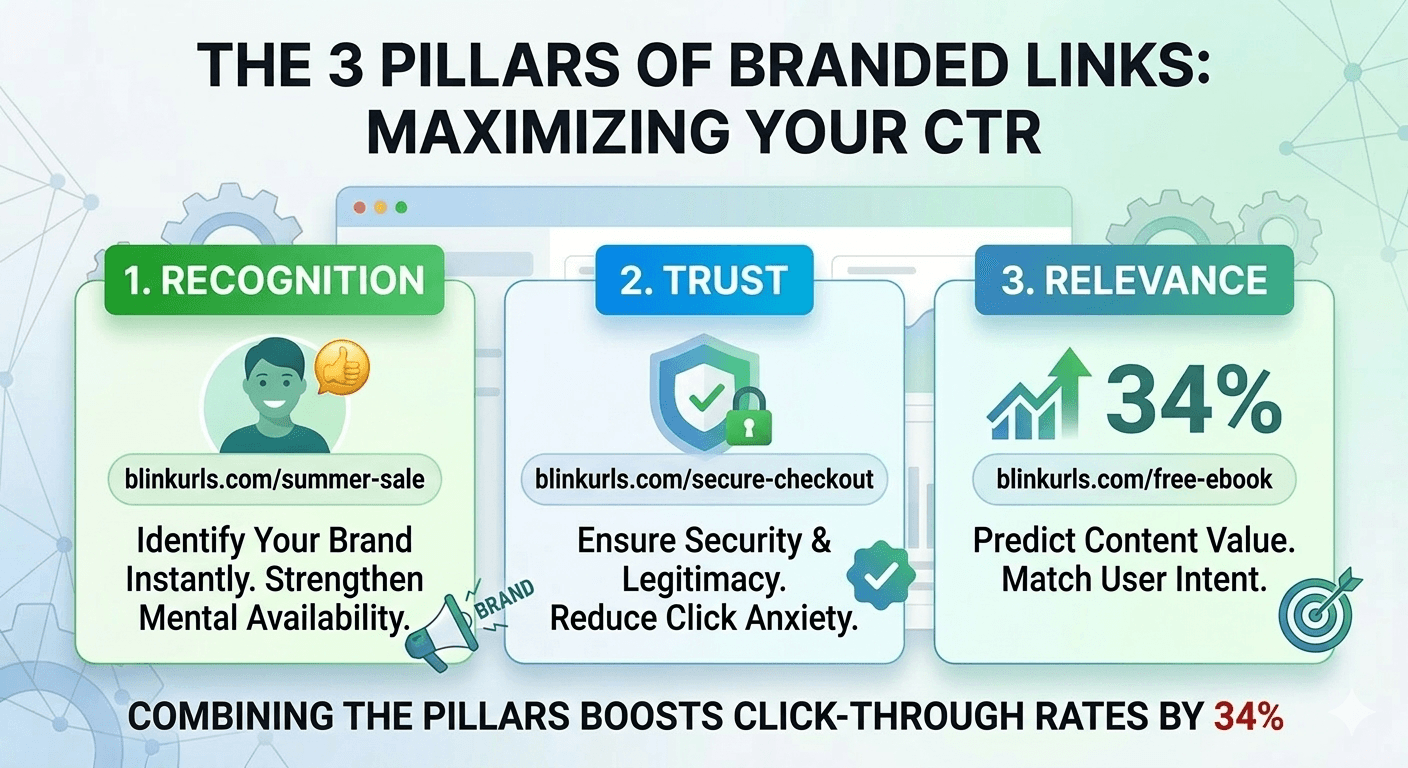
Data consistently indicates that branded links can drive a 34% increase in click-through rates (CTR). This surge in performance isn't accidental; it is driven by three core psychological pillars:
1. Immediate Brand Recall
Every time a user sees your brand name in a link, it counts as a brand impression. Even if they don’t click, you are building familiarity. Over time, this makes your links stand out against the "noise" of competitors who use generic, anonymous shorteners.
2. The Verification Effect
In an era of rising cyber-fraud, users are trained to be cautious. A branded link serves as a Verification Token. It signals that the content is hosted or endorsed by a legitimate entity. For enterprise-grade marketing, this professional appearance is the difference between a conversion and a bounce.
3. Semantic Relevance
The "slug" provides a preview of the value proposition.
Generic:
bit.ly/3xJkL9(Zero information)Branded:
blinkurls.com/free-ebook(Clear value) By aligning the link text with the user's intent, you reduce the cognitive load required to make a decision.
Case Study: Marketing Campaigns in 2026
Consider a retailer launching a multi-channel campaign. They use two types of links across their SMS and Social channels:
| Campaign Element | Generic Short Link | Branded BlinkURL |
|---|---|---|
| User Perception | "Is this spam?" | "This is from the brand I follow." |
| SMS Delivery | Higher risk of carrier filtering | High deliverability & trust |
| Social Sharing | Looks "tacked on" | Integrated into the copy |
| Final CTR | 2.1% | 2.8% (+33.3%) |
Implementing Branded Links with BlinkURLs
We built BlinkURLs to handle the heavy lifting of link management so you can focus on strategy. Transitioning to a branded strategy takes less than sixty seconds:
Select Your Destination: Input your long marketing URL.
Claim Your Keyword: On any BlinkURLs professional plan, you can specify your custom alias in the "Custom Field."
Deploy Globally: Our Edge-Native infrastructure ensures that your branded links resolve in under 300ms, regardless of where your audience is located. This speed is critical—every 100ms of delay can decrease conversion rates by 7%.
Conclusion
Branded links are no longer a "nice-to-have" luxury for large corporations. For any brand looking to maximize its ROI in 2026, they are a fundamental requirement for building trust and ensuring that your marketing spend translates into actual clicks.
Audit Domain Trust & Phishing Reputation
Check any URL or domain across global real-time blocklists to verify safety, prevent phishing, and protect your ad budget.
Reviews & Comments
Join the conversation. Share your thoughts, rate this article, and help us improve.
Reader Activity (0)
No approved reviews yet. Be the first to leave a comment!
Leave a Review
Your email address will not be published. Required fields are marked *
Deploy on High-Performance Infrastructure
Hostinger provides fast, secure, and affordable web hosting for your brand.
Sub-50ms Edge Redirects
Don't let slow links kill your conversion rate. Experience the world's fastest redirect engine.
Stay ahead of the curve
Elevate your growth alongside 5,000+ elite link scientists receiving our weekly insights on optimization and digital scale.
Security First: The Unseen Dangers of Shortened Links and How to Stay Safe
More from Marketing
View all
Stop Manual Link Shortening: Fix Hour-Long Campaign Setup Instantly (Free)
UTM Link Generator 101: How to Build, Track, and Optimize Campaign URLs for Maximum Marketing ROI (2026 Guide)