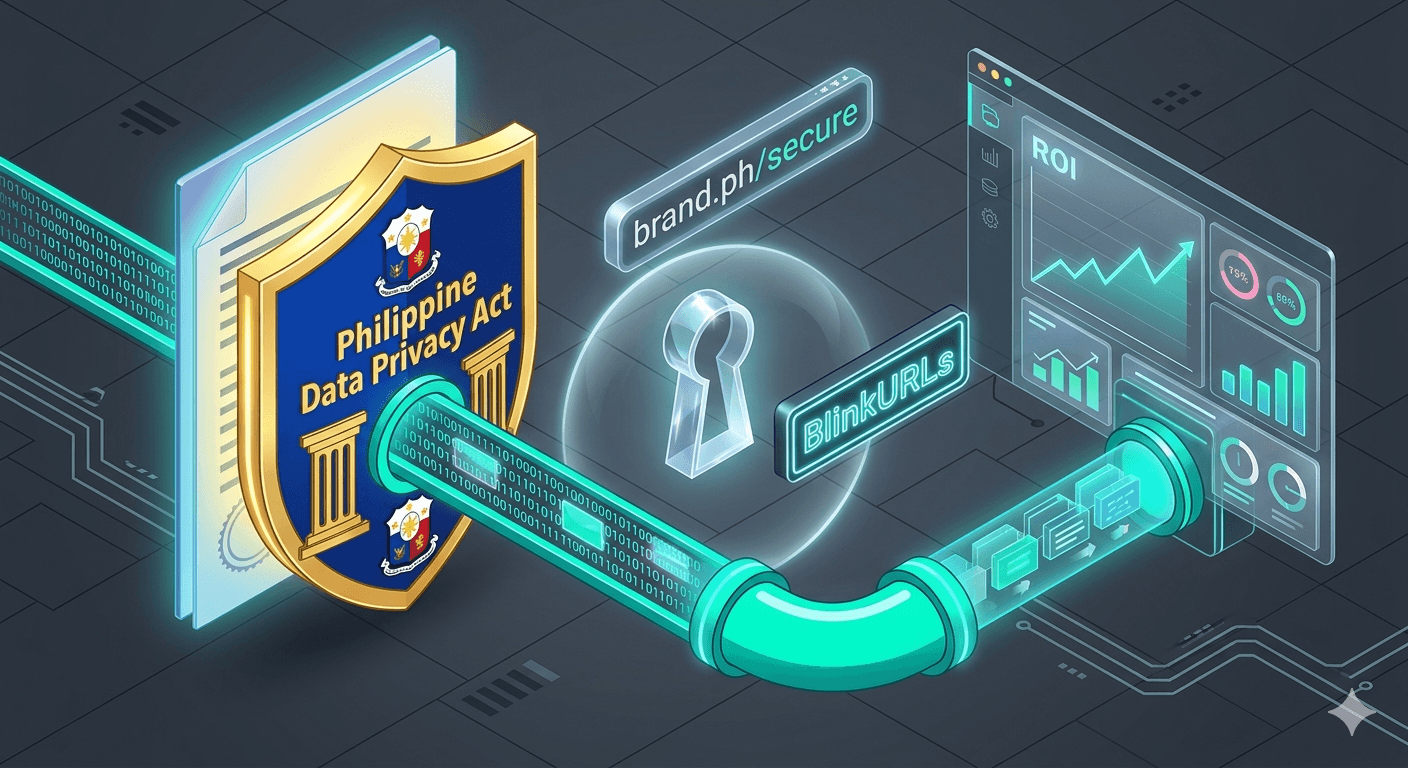
If you run an e-commerce brand, a digital agency, or a startup in the Philippines, you are currently caught in a brutal tug-of-war.
On one side, you need granular data. You need to know exactly which Facebook ad, TikTok video, or Viber blast sent a customer to your checkout page so you can scale your business. On the other side, you have the National Privacy Commission (NPC) enforcing the Data Privacy Act (DPA), alongside global tech giants completely axing third-party tracking cookies.
The old way of tracking—dropping heavy, aggressive scripts onto your site that hover over a user's every move and harvest their personal information—is no longer just bad practice. It’s a compliance nightmare.
So how do you track your return on ad spend (ROAS) without breaking local laws or losing your mind? Let’s break down the reality of privacy-first marketing in the Philippines.
The Privacy Collision Course: Why Your Pixels are at Risk
Many local business owners think data privacy compliance is only for massive banks or telecom companies. It isn't. If you collect, store, or process personal data from Filipino citizens—even if it’s just an email address for a newsletter or a phone number for a cash-on-delivery (COD) order—the DPA applies to you.
Here is where standard marketing attribution clashes with privacy:
Consent Fatigue: Aggressive tracking pixels collect Personally Identifiable Information (PII) like precise IP addresses and cross-site browsing histories without explicit, informed user consent.
The Data Poisoning Problem: Because browsers like Safari and Firefox aggressively block these trackers, and ad-blocker usage is skyrocketing among tech-savvy Filipinos, your Meta and Google dashboards are filling up with fragmented, inaccurate data.
The Liability: Passing unencrypted, raw customer data back to foreign ad networks without a clear Data Sharing Agreement can leave your brand exposed to massive NPC penalties if a data breach occurs.
Marketers are drowning in messy data, while corporate Data Protection Officers (DPOs) are constantly waving red flags. It’s time for a cleaner approach.
The Solution: Anonymized Edge Attribution
You don’t need to spy on a customer's entire digital life just to know if they clicked your ad. You just need to track the intent and the context of the click, not the identity of the human behind it.
This is where switching to an intelligent, edge-native link management system changes the game. Instead of relying on client-side tracking scripts that run inside the user's browser (and get blocked), you use Server-Side Link Intelligence.
PRIVACY-FIRST ATTRIBUTION WHAT YOU DON'T TRACK WHAT YOU DO TRACK (Risks DPA Non-Compliance) (100% Compliant & Accurate) ✗ Raw IP Addresses ✓ Aggregated Region (e.g. PH) ✗ Cross-Site Browsing History ✓ Platform Origin (TikTok) ✗ Unencrypted User Profiles ✓ Clean UTM Campaign Data ✗ Third-Party Cookie Assets ✓ Exact Click Timestamps
When a user clicks a branded link (like yourbrand.ph/summer-sale), BlinkURLs processes the redirection at the network edge in under 50 milliseconds. It strips out the privacy-invasive fluff and logs only functional campaign metadata: the platform origin, the specific UTM parameters, the timestamp, and the aggregated geographic region.
You get pristine, highly accurate attribution data delivered straight to your dashboard, and your users get absolute privacy. No PII is compromised, no tracking cookies are dropped, and your compliance is secure.
Secure Dev-Ops: Protecting Data Behind the Scenes
Data privacy isn’t just about external marketing links; it’s about your internal team workflows.
Think about how your marketing and development teams coordinate. How often do your media buyers share raw CSV lists of customer phone numbers, internal store credentials, or sensitive webhook URLs over casual chat apps like Slack, Telegram, or Viber?
Once those links are sent, they live in chat histories forever. If a team member’s device is compromised, your customer database is exposed.
To keep internal operations secure, modern teams leverage features like Burn-on-Read links and custom password protections. When you need to pass an API key, an unreleased staging link, or an internal data sheet to a contractor or employee, you wrap it in a secure temporary node. Once the recipient opens the link, the data completely self-destructs from the server, ensuring your internal communication leaves zero digital footprint for malicious actors to exploit.
The Bottom Line: Trust is Your Ultimate Conversion Engine
In the modern digital economy, data security is no longer a boring corporate checkbox—it is a competitive advantage. Local consumers are highly protective of their digital footprints, and they actively buy from brands they trust.
By moving away from clunky, privacy-invasive tracker scripts and moving toward lightning-fast, edge-native link intelligence, you win on every front:
Your application performance stays incredibly fast.
Your ad attribution data remains remarkably accurate.
Your business stays entirely compliant with the National Privacy Commission.
Stop relying on tracking pixels that compromise your data integrity and slow down your user experience.

Generate Standardized UTM Links for GA4
Eliminate dark traffic and measure multichannel ROI. Generate clean campaign URLs and shorten them into branded links in seconds.
Reviews & Comments
Join the conversation. Share your thoughts, rate this article, and help us improve.
Reader Activity (0)
No approved reviews yet. Be the first to leave a comment!
Leave a Review
Your email address will not be published. Required fields are marked *
Deploy on High-Performance Infrastructure
Hostinger provides fast, secure, and affordable web hosting for your brand.
Sub-50ms Edge Redirects
Don't let slow links kill your conversion rate. Experience the world's fastest redirect engine.
Stay ahead of the curve
Elevate your growth alongside 5,000+ elite link scientists receiving our weekly insights on optimization and digital scale.